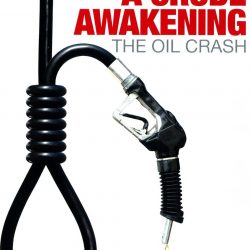
| So,
what should We do now?
This
is a critically important question, and there are a
variety of answers. We must all do our part as citizens
and also persuade government and industry to begin
to prepare for these changing times in an energy
constrained future. Nothing is more critically important
than being prepared for the changes that lie
ahead. Because our lifestyles are so dependent
upon fossil fuels as a foundation for existence, it's
not easy to realize the many impacts that shortages
could bring.
Local and personal sustainability
is going to be the key success factor in weathering the
challenges. What do WE need to do as a
community? What should YOU do to prepare yourselves and
your families? The most significant
impact is going to be the changes we
experience. And adapting to change takes
enormous amounts of time. Those who are prepared for the new
lifestyle before it happens will be far better off
than those who don't prepare and are unaccustomed to
the new requirements of life. (Remember the
catastrophic confusion in New Orleans?) The sooner you start, the
better off you will be. Waiting for a crisis to
occur and then figuring out how to adapt just isn't a
wise approach.
What
should Austin be considering now?
There
are literally thousands of changes that will be
needed in our community to both extend our runway
of time to convert to new sources of energy and
prepare ourselves for the future economy. The
following list includes a few first steps:
- Start
by establishing a Citizens Advisory Board to
assess energy threats, identify sustainability
needs, and recommend action plans to the city.
- Begin
to substantially relocalize the economy to
redirect locally expended economic resources back
into the local economy, rather than importing
goods and services
- Expand
and promote existing local coops to support
larger memberships and expanded goods and
services. Initiate
new local coops for goods, services, and
transportation
- Dramatically
reduce spending and development on roads
- Establish
HOV lanes for every public street with four lanes
or more
- Dramatically
increase spending on mass transit, including
light rail, and provide incentives for citizens
to use it heavily
- Design
and develop a local rail freight depot and ask
businesses to request freight by rail
instead of by overland truck or air (In the U.S.,
freight rail carries 27.8% of the ton-miles at 220,000
barrels/day while trucks carry 32.1% of the freight
miles with 2.07 million barrels/day [all
2002 data.] Light
commercial trucks consume another 300,000 barrels/day.
This makes railroads more than eight times more
fuel-efficient, as well as more labor-efficient than
trucking.)
- Aggressively transition government and industry
transportation fleets to plug-in hybrid vehicles
as soon as possible
- Aggressively
begin to deploy plug-in hybrid infrastructure
throughout our city, on streets and in public parking areas
(electrical parking meters for recharging of
vehicle batteries)
- Encourage
and provide incentives to utilize alternative
transportation systems to reduce private
passenger car use
- Convert
all school buses to renewable fuels and start
using them during "off" periods to
expand the mass transit system
- Transition
all street lighting and signals to solar or other
renewable energy sources
- Design
future growth with a focus on high-density
neighborhoods designed to support compact walking
communities, and connected to other areas via
exclusive mass
transit, walking path, and bicycle trail
corridors
- Minimize
urban growth and sprawl
- Mandate
by code
one or more large community gardens within each
neighborhood and/or subdivision with plots for
lease by residents. Convert city-owned
arable land to community agriculture.
- Support
and expand local agriculture -- protect valuable
local arable land that is suitable for agriculture from
being paved over or built upon
- Support
and expand more local industries to produce more
goods and services at the local level
- Provide
local businesses with incentives to expand, to
develop local markets and local employment
- Methodically
begin to replace imports of food, water, goods
and services, and energy with locally
supplied/produced resources.
- Decentralize
energy generation by dramatically increasing
incentives for grid-intertie systems for both
residential and business users who generate power
via solar or other renewable energy methods.
- Initiate
a massive rooftop solar initiative for homes,
businesses and parking lots across the region for
both energy production and hot water.
- Dramatically
expand the Austin Energy GreenChoice®
program and other energy efficiency programs
- Provide
incentives for local businesses to support
telecommuting, 4-day work-weeks, and flexible
work hours to reduce commuting.
- Consider
four-day school weeks with hours that more
closely represent adult work hours so that
parents can incorporate delivery or pickup of
their school children while on their way to or
from work.
- Above
all, educate
our citizens about coming energy shortages, risk
mitigation strategies, and provide meaningful incentives to increase
energy efficiencies and dramatically reduce local
fuel consumption
What
should individuals and families be considering now?
The
following suggestions are offered to create awareness, and to start
transitioning to a more sustainable lifestyle for
yourself and your family, ...now. Above all,
individuals and families must prepare themselves to
live with unexpected severe shortages of goods,
services, and energy caused either by sudden fuel
shortages, or astronomical fuel costs.
- Reduce
your dependency on the infrastructures
that we currently take for granted. Learn
to live without them to the extent possible.
"Infrastructure" means
any tangible resource that
is supplied from a central community service:
electricity, water, gas, shipping and
transportation, electronic communication, and
supplies may be vulnerable to sudden fossil fuel
shortages or price spikes. Currently more than 50% of the
electricity generated in Texas is provided by
Natural Gas, a fossil fuel that is now becoming
much harder to obtain. Most of the rest comes from
coal. Reducing your energy requirements will
help extend the runway of available fossil fuels
to buy badly needed time for replacement systems to be
deployed, and it will save you money.
Make
a difference by changing your habits
Changing your light bulbs to compact fluorescents,
for example, will reduce your electric bill .
Even small changes can make big differences; over the lifetime of each new
CF bulb you will save the energy equivalent of 500
pounds of coal as compared to incandescent
lighting. A single 100-watt bulb replaced
with a 25-watt screw-in compact fluorescent can save
you as much as $75 on your power bill over the life of that
bulb. If you are off-grid, it can save you up to
$400 in photovoltaic's. A
typical compact fluorescent replacement for a
300-watt halogen light will save approximately
$20 per year if used 3 hours per day on average.
Increasing the insulation
in your home and using manual machinery instead of
electric or gas-powered devices will reduce
energy consumption and costs as well. Visit
the hardware store. Buy a water-heater blanket,
low-flow showerheads, faucet aerators, and
compact fluorescents, as needed. Low-flow shower heads
reduce the water bill and consumption so that
city pump demand is reduced. How much electricity can be saved through
efficient use? Most existing houses can be
modified to cut their electricity use by half,
repaying the retrofitting costs in a few years,
and with minimal effort. Planting shrubs, bushes, and vines next to your
house creates dead air spaces that insulate
your home in both winter and summer. Plant so
there will be at least 1 foot (30 centimeters)
of space between full-grown plants and your
home's wall.
No-cost changes
everyone should make:
- Turn off lights
and appliances when not in use.
- Set your winter
thermostat to 68 degrees when home and set back
to 60 degrees while sleeping or away from home
for more than four hours. In summer, set
it to 78 degrees when home and 85 degrees when
away. Austin Energy offers a free
programmable thermostat program.
- Open window
coverings (drapes) on the sunny side of your home to take
advantage of the sun. Then close the drapes
as the sun goes down.
- Use the power management
features on your computer instead of
screen-savers! With power management,
monitors power down to 30 watts or less of
electricity; screen savers operate monitors at
60 to 120 watts.
- Throw open the windows and
let the fresh air condition the house as much as
possible. Open them on two sides of the
house to create a breeze.
- Set your water
heater thermostat to 120 degrees or lower.
- If you
have a waterbed, make it every
morning. heavier covers will insulate
it when not in use and save up to 1/3 on
the energy used to heat the water.
- Keep your
freezer as full as possible. Use plastic bottles
three-quarters full of water to fill in the empty spaces.
- Make sure food
is cool and covered before it goes into the
refrigerator.
- Only run full loads
in your washer and dryer and dishwasher,
and on low temperature settings.
- Vacuum your
refrigerator coils and keep lights and lighting
fixtures clean.
- Unplug your
televisions/DVD player/VCR when you're on
vacation; better yet do it every time you
are not using them. So what if it
takes an extra 2 seconds to re-power it up
when you turn it back on? Most powerstrips
have an on/off switch to make it easy.
- Reduce your dependency on the automobile for
transportation.
Carpool, walk, ride your bike,
use the bus, ride a scooter. Campaign for dramatic
increases in public transportation. Light
rail is a far more energy efficient means of
transportation than the several thousand cars and
SUV's such services ultimately replace. If you must use your personal
automobile or truck, don't
travel during peak traffic periods, and
consolidate your trips to reduce fuel
consumption. Telecommute if possible.
Ask your employer if they would consider a 4-day
work week at 10 hours per day instead of a
five-day work week. Ask if they will
support flexible hours so you aren't driving
during rush hour. Move closer to work or
work closer to home. If you own any vehicle
that gets less than 20 miles per gallon, it
is time to trade it in on a far more economical means
of transportation -- now, before such vehicles
become too expensive. Driving urban assault
vehicles or other large vehicles to jet around
town, especially with just one occupant, is a
very blatant example of
conspicuous consumption of valuable (and
depleting) natural resources.
- Reduce your dependency on imported (non-local)
goods and services.
It is now said that the average food item
travels more than 1500 miles before it ends up on
your kitchen table. Think about the source of
your food purchases; name-brand prepared foods, cereals,
chips and sauces, seafood, fresh produce that is
"out-of-season", and so on. Each consumed product or service
that comes from outside the local area creates
two significant problems: First is the fuel
needed to transport those goods, and the second is that your personal
income is being exported to other communities for
their use, instead of keeping it local to be used
to help make your own community sustainable.
For example, if you pay
$5 for a quart of
strawberries from New Zealand, your money is
going to new Zealand, and all those points in
between for the transportation companies and fuel
providers. If
you pay $5 for a quart of strawberries from
your
local area, that money is kept in the area and
reused locally at least once, perhaps numerous times.
Think of the difference 100,000 quarts of strawberries
would make over one season (see this article
from the Boulder, CO Business Alliance about shopping
locally.) Local spending creates an
exponential increase in the value of the local
economy and reduces dependency on outside
suppliers. A great trend is to buy from
your local farmers
markets or joining a CSA
(Community Supported Agriculture) Program. Community
Supported Agriculture arrangements
are sort of like cooperatives -- you buy one
or more shares and the organic farm then supplies you with
fresh produce at periodic times -- sometimes
every week, sometimes once a month, usually
seasonally, and so on. Most CSA's
offer organic foods.
- Prepare yourself and your family to weather
unexpected shortages.
Shortages can take many forms and folks usually
don't know about them until it's too late.
Gasoline shortages are easy to imagine. But
what happens if the local grocery store supply
companies can't get enough fuel to power their delivery
trucks, or can't afford it? Nobody is going to
pay $8 for a single head of lettuce, unless that's
the only source of lettuce. The grocery
stores in America only stock, on average, a
three-day supply of goods. If a city hosts one million
residents, that's three million meals per day that
need to be supplied somehow.
Protect your
family against shortages by stocking bulk
dry goods like rice, beans, wheat, flour, sugar,
powdered milk, frequently used spices, dehydrated
fruits and vegetables, and so on. A
half-years' supply would
be a good start and doesn't take up too much room
in the garage or pantry. Bulk foods can be
stored in sealed 5-gallon buckets to assure freshness.
Make sure these
foods are adequately sealed and protected from moisture and
insects to prevent spoilage. Become accustomed
to rotating these supplies -- use the oldest first
and restock the supply when that first container
runs empty. It's actually cheaper to buy in
bulk.
Do you know how to make bread or
tortillas?...Preserve food?...What about stocking supplies of first aid
items or medicines (watch those expiration dates)? Toothbrushes and
razors? Soaps and cleansers? Reusable
storage
containers? Rechargeable batteries (you can
save up to $1500 per set of batteries if you
continually recharge them!) How about
a supply of Sterno fuel to accommodate heating of
food during unexpected brown-outs? What do you
typically need to restock in your home regularly, and which of those items can you really
live without in the event of an unexpected supply
shortage? Could you start doing without
some of those items now to immunize your family
from the challenges posed by unexpected shortages in the future?
- Plant an edible yard and a backyard
garden.
Fresh vegetables will be
worth their price in gold if trucks can't get to the stores. A home
vegetable garden may not provide for all of your
food needs but having fresh pole beans, carrots,
onions, tomatoes and herbs available certainly can't hurt.
Study bio-intensive organic gardening techniques
-- a way of dramatically increasing the yields
from your backyard garden. Plant vegetables
as landscaping features; a bed of cabbages,
onions, broccoli and carrots for example, or corn stalks
as a privacy screen, or a pole bean teepee.
How about landscaping mounds for potatoes or
squash or watermelons? Create a
fruit-bearing hedge of grapes, or a closely
pruned hedge combination of peaches, apricots,
pears, and figs. Berries add a nice touch
to breakfasts and deserts. And don't forget
to learn how to save seeds for the next season --
use only non-genetically modified (non-GMO), cross-pollinating, or heirloom
seeds
--
and create compost out of your kitchen and yard
waste. Use drip irrigation to save
water.
The local agricultural
extension service is a good resource for home
gardeners. Basic garden tools include a
spade, fork, u-bar, hoes and weeding apparatus,
garden shears and scissors, a compost pile, and
the book, "How To Grow more Vegetables"
by John Jeavons -- describing biointensive
approaches to vegetable gardening.
- Learn to make simple repairs around your home.
You can learn a large number of home repair
skills at free classes offered on Saturday's by Home
Depot and Loews and dozens of other
locations. Can you repair a break in a
water line? Repair weather-stripping?
Install or repair rain gutters? Repair a
tile floor? Learning to handle these skills with manual tools could be a real security
issue, not to mention a potential source of
future income. It
would certainly be a good idea to have a well
stocked tool box on hand as well. Basic house
tools include various screwdrivers, a claw hammer,
adjustable wrenches, various pliers, a basic hand
saw, a hand-drill with bits, a heavy-duty pair of
scissors, lots of duct tape, rope, cordage, twine, and a
spool of wire. And, re-use and recycle by
shopping at the Austin RE-store - a building materials
recycling center. See www.re-store.com.
- Get to know your neighbors and become good
friends.
Close groups of friends
and neighbors, especially in a crisis, tend to be far more
helpful to each other than strangers. You never know when that help could
mean the difference between success or
distress. It is generally unrealistic to
assume any individual or family can become skilled
in every vocation needed to be completely self
sufficient. Getting to know your neighbors
helps you to find out what they know how to
do. Exchange your services. Pool your
resources.
The following list
provides some examples of a low-energy way of living:
- Clotheslines
replace dryers
- Flash,
solar, or geothermal water
heaters reduce natural gas or electricity use for
heating water (Electric water
heaters use the most energy.)
- Using cold water
for dishwashing, clothes washing, showering, etc.
reduces the need to heat water
- Rooftop water
collectors and cisterns replace city water, at
least for gardening and non-potable household
chores.
- Thick-walled,
efficient refrigerators and freezers replace
conventional appliances. (Chest type
refrigerators and freezers are far more energy
efficient because the cold air doesn't "fall
out the door" every time you open it.)
- Canning and drying
to reduce requirements for freezing of food
or buying from afar
- Thick-wall
construction of houses and heavy attic
insulation reduces heating and cooling requirements
- Triple-paned
windows with covers (drapes) reduces heat
and A/C energy use
- Solar
screens can block 50-70% of heat entering
through windows.
- Passive solar and
thermal storage reduce heater/air conditioning
need
- Single-source
heaters replace central heating; and why not close
those HVAC
vents in unused rooms? (Most European
homes do not heat or cool the bathroom.)
- Geothermal heat
pump kits replace electric heat pumps and gas
furnaces reducing
energy use by up to two thirds.
- Compact
fluorescents replace incandescent light bulbs
and dramatically reduce electricity use.
Contact your neighbors
and buy in
bulk for discounts. Ask Austin Energy
for discount coupons.
- Hand tools replace
electric tools – mixers, dicers, cutters,
vacuums, grinders, lawnmowers, weed eaters, etc.
- Composting toilets
and earth toilets reduce water use, reduce soil
nutrient loss, and provide fertilizer.
- The
mantra, "Stewards of
the earth" replaces "Cleanliness is next
to godliness."
Do you have more
suggestions? Let our webmaster
know.
|